Beyond Prediction: On the Unseen Reach of a Traditional Favomancy Method
In a recent article on the Balkan favomancy mechanics, I addressed the inherent limitations of traditional divinatory methods such as bean casting. Anyone who has had the chance to observe experienced readers at work will have noticed that most questions posed to such methods are predictive in nature, or at least seek a measurable outcome: How soon will I find a new job? What sex will my child be? These are precisely the kinds of questions for which counting-based systems are particularly well suited.
But what happens when the question is not predictive at all?
Descriptive questions do not ask for outcomes or timelines. As the term suggests, they ask for description: the quality of a relationship, the character of a job, the role something plays in one’s life. Systems built on measurement, counting, and fixed matrices excel when asked to forecast or quantify. The challenge arises when such a rigid structure is expected to produce a nuanced, descriptive picture.
When I opened the favomancy reading offer on my website a few days ago—without a fixed price—I fully expected a stream of straightforward predictive questions. But I have never taken the easy road in life (nor has fate ever offered me one, to be honest), so the very first inquiry that came in was, of course, a descriptive one. A client wanted to know what role the practice of art plays in his life.
I was taken aback for a moment, and then immediately thought: of course. If there was ever a question that would test the presumed limits of this method, this was it. In hindsight, I am grateful to the client—not only for posing the question, but also for allowing me to turn the reading into an article.
From the outset, I felt it necessary to be transparent. Traditional bean readings are historically oriented toward concrete matters: money, health, family, marriage, children, etc. Beyond these domains, I could not be certain how far the method would stretch, simply because I had neither performed nor witnessed a truly descriptive bean reading before. The client, however, was fully aware of this and reassured me that he was comfortable proceeding. Sometimes, as he put it, less truly is more.
With that understanding, I proceeded with the reading.
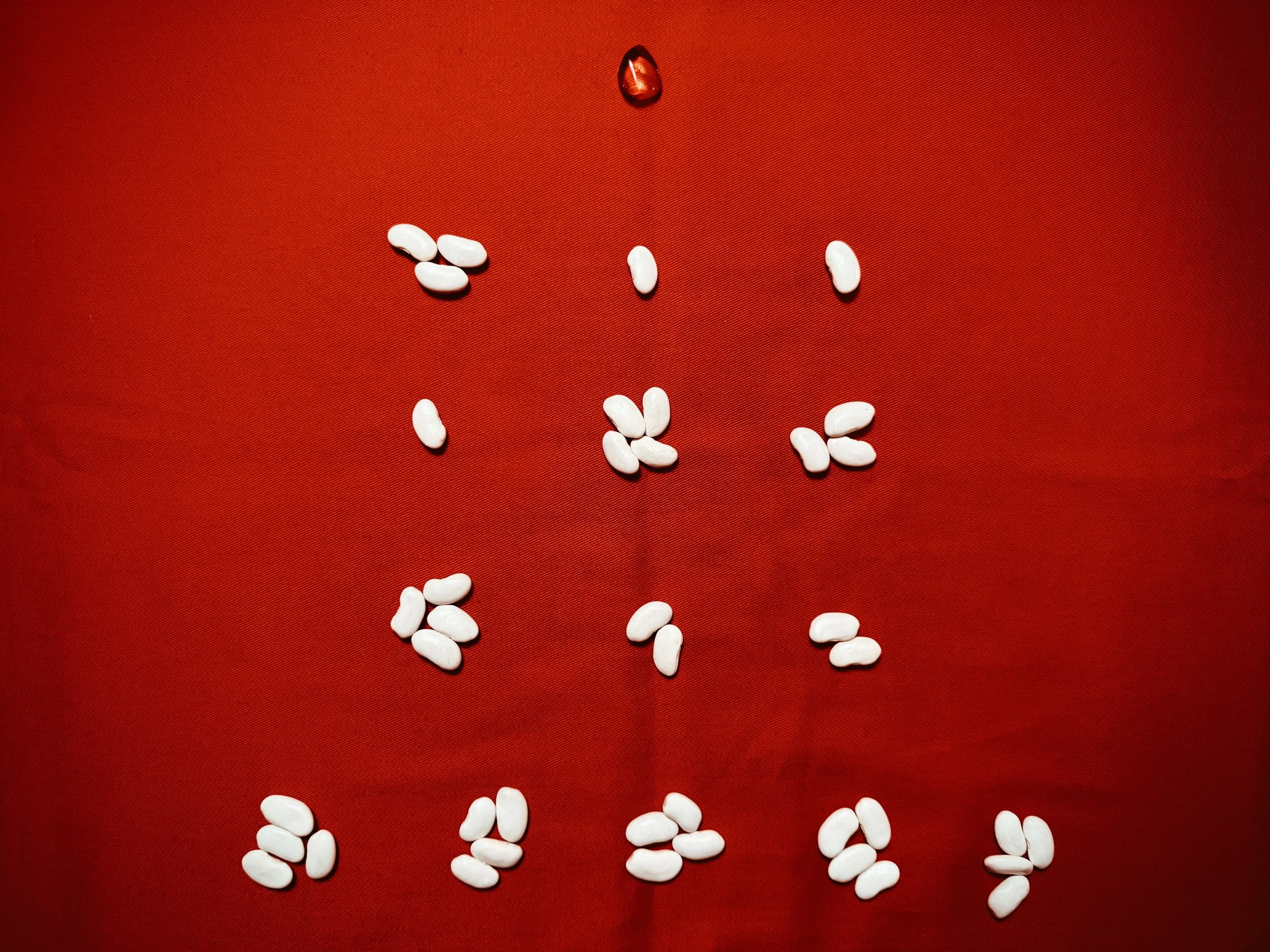
Traditional Balkan spread, incorporating the Bosnian method of counting remaining beans into groups of four.
What immediately stands out in this casting is how divided the beans are. There are five groups consisting of one or two beans, and four groups consisting of three or four. This is the first element to observe, as the number of beans in each pile sets the overall tone of the reading. One indicates little; four indicates a lot. When assessing whether something plays a broadly supportive or positive role in a person’s life, one would ideally expect a predominance of piles of three and four. Here, however, the piles of one and two hold a slight majority. This suggests that the full potential of the artistic practice in the client’s life has not yet been realized.
A closer look reveals the dynamic between the client and the practice itself. When comparing the left side of the square to the right, it becomes apparent that the client is currently the one investing more into this relationship. The effort and energy being put in are not yet met with an equivalent return. In short, the practice of art is presently taking more than it gives.
Methodologically, this required a deliberate adjustment of the traditional framework. In customary readings, the left column represents a woman, the right a man, with the middle column standing for their shared home or relationship. Such rules are useful—until they no longer serve the question at hand. In this case, the client was the seeking party, and was therefore placed on the left side. The art practice itself was positioned on the right, set in direct contrast to the client. Within this context, the configuration proves not only workable but precise.
To understand why this imbalance exists, the individual rows must be examined.
In the row of the head, there are clear indications of strong ideas and genuine capability. The client possesses what is needed to develop the practice. At the same time, there is a marked sensitivity to the opinions and words of others, which allows external voices to influence direction and interfere with the process, creating hesitation (311).
The deeper blockage appears in the row of the heart. Something essential has not yet settled or taken form. At the same time, the surrounding environment does not appear particularly supportive or receptive (143). The difficulty is therefore not purely internal, but also shaped by external circumstances.
When everything is brought together, the financial aspect stands out most clearly. The practice remains a disappointment in this regard. It lacks reliability and cannot yet be depended upon materially (422).
This configuration calls for caution regarding the people in the immediate surroundings of the practice. The client presents as open-hearted and generous, inclined to share freely. This disposition, however, also creates vulnerability to being taken advantage of (314 contrasted with 132). Viewed in this light, it is unsurprising that the bond between the client and the practice itself—represented in the middle column (142)—appears strained both in the present and in the foreseeable future.
That said, the picture is not entirely bleak. The remaining beans form five groups of four, indicating the arrival of good news—something that may encourage perseverance. There is light at the end of the tunnel, but the process requires time. The practice still needs to fully crystallize before it can begin to yield tangible benefits.
At present, the role of art in the client’s life is that of a practice functioning largely as a hobby: financially unrewarding, while others may already be benefiting from it. Awareness and discernment remain essential.
***
When the client later described the reading as spot-on, the outcome was both satisfying and instructive. We often remain bound to certain ways of working simply because our teachers—and their teachers before them—demonstrated methods in a particular manner. My own mentors taught primarily through predictive questions, and, in truth, this is how most traditional divinatory methods, cartomancy included, are commonly transmitted.
Traditional rules, however, remain rules until they are not. And I feel no obligation to submit to peer pressure from the dead. Any divinatory method can address any type of question, provided it is approached with common sense and a clear understanding of where attention must be directed. When something fails to function within a given context, it is not the method that must be defended, but the approach that must be adapted.
This is not a rejection of tradition, but its continuation. One honors one’s teachers not by repetition, but by carrying their work forward—testing it, refining it, and allowing it to remain alive.
May your paths be uncrossed.
Nebojša
Support the Free Blog
This blog will always remain free. If you find value in the writing and want to help me sustain the time and research that go into each article, you can make a contribution of your choice. It keeps the work independent, ad-free, and focused on substance rather than volume.
Favomancy Reading
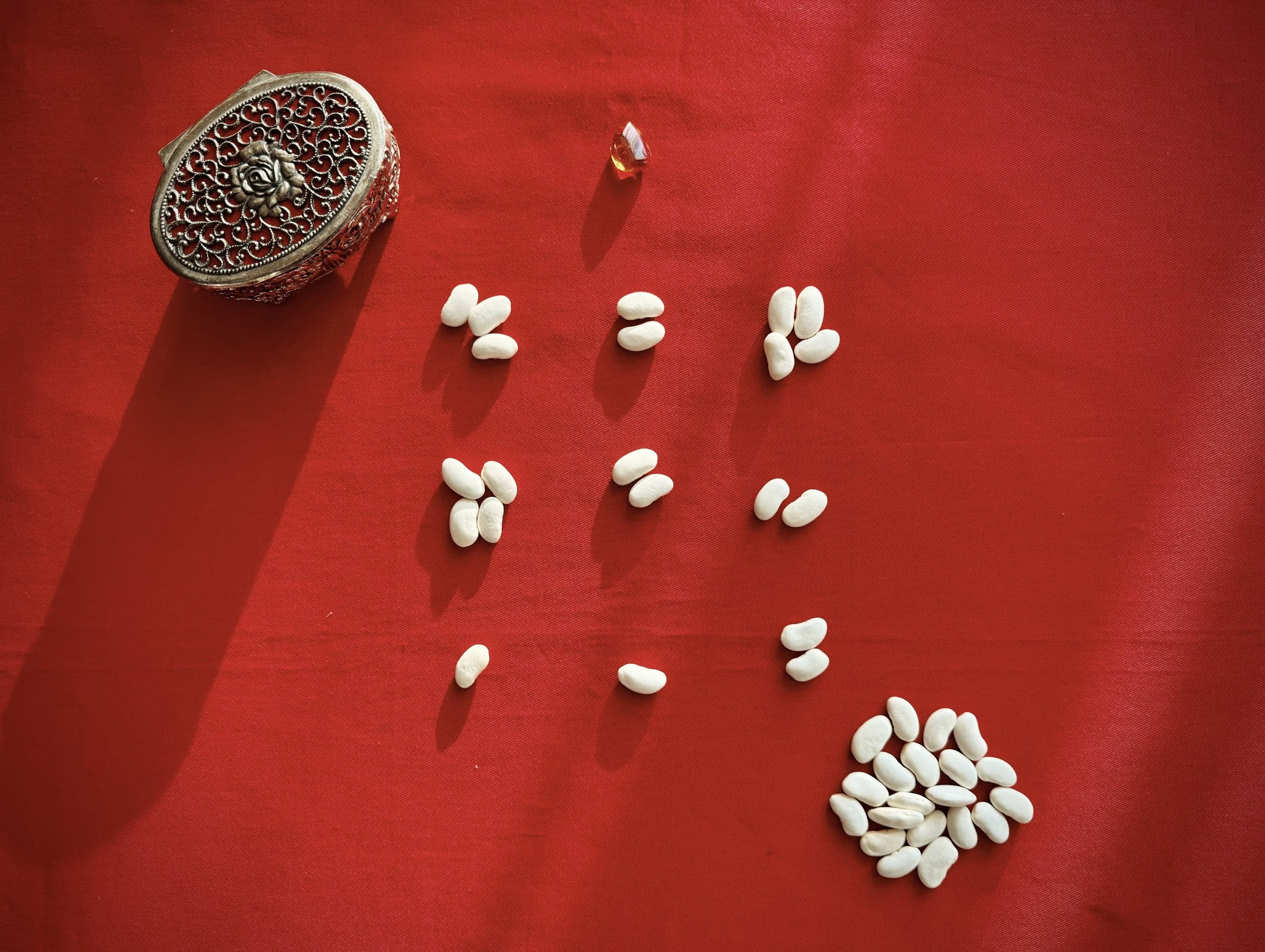
If you are interested in experiencing a favomancy reading yourself, I currently offer bean divination through The Uncrossed Path. The readings are conducted in the spirit of the tradition, without a fixed price, and are suited for both predictive and carefully framed descriptive questions. More details about the method and the process can be found on the Favomancy page.