Reading the Playing Cards Tableau for a Precise Question
Ever since I launched the Reading the 32 Playing Cards course, I've been receiving questions and requests for more examples using the Tableau readings. As it happens, the reading repertoire for clients and friends alike is rich in such examples, so I would like to take this opportunity to dive into a nice example and show the dynamics of one of my favorite Tableau reading methods, a traditional layout I picked up from the old Grand Folk Dream Book.
These old Tableau reading systems, and I call them systems because they usually involved an entire parlor style of sequential readings, not just one laying of cards, were usually used for general readings, à la "tell me my fortune, witch." But we do not have to bow to this rule by any means. Whenever I am in a position to teach cartomancy, one of the first things I try to transmit to a student is that clear and specific questions will always beat a general reading. And any cartomancy method will be able to bend itself to it. Having a clear question facilitates higher precision, simply because a question acts like an anchor for the entire reading. Was the question about the state of a marriage? Then you will not go on a tangent and read the cards for the client's mother's health. Why? Because that was not the question! Sadly, many card readers still have a hard time processing this. Nevertheless, my followers were eager to see a tableau in action, handling a specific question, so here we go.
A male client wanted to know if his relationship with the men he is interested in will grow more intimate. There was intimacy here in the past, which grew out of a friendship, but the situation does not seem to progress further.
Following the steps of the Traditional Tableau from the Grand Folk Dream Book, I cut the deck into three piles and turned them over to reveal the bottom nine cards, to see what they have to say about the situation's setup. In general readings, this is where a cartomancer identifies the primary point of interest for the client and uses it as an anchor for the interpretation of the tableau. We will also refer to it in the same fashion.
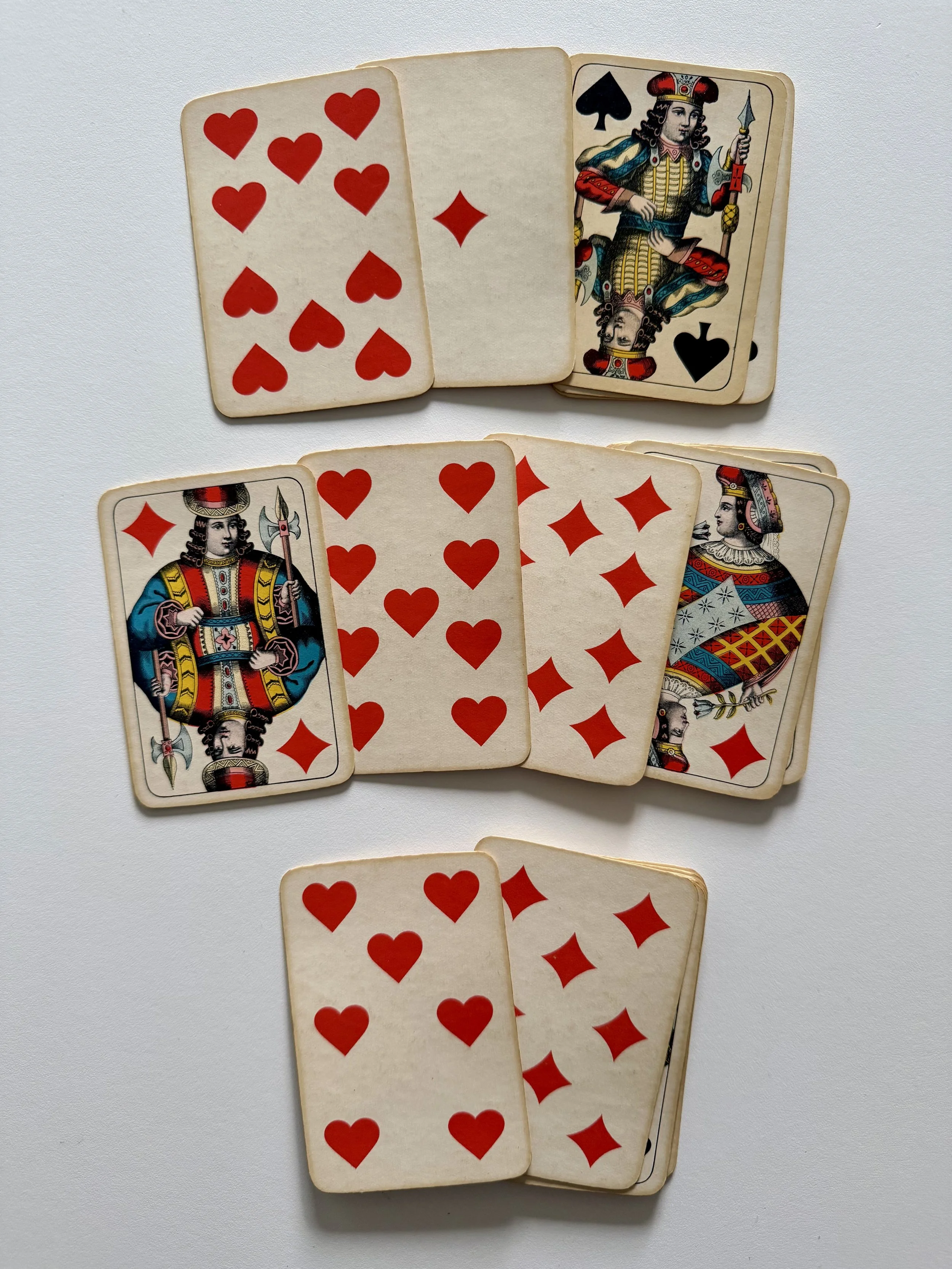
We note first that neither of the significators for the client nor his lover appeared in this cut (K♥ for the client, K♦ for the lover). However, we see that there are true feelings here at play, that there is communication and the intention to be more intimate, but there is currently an opposing force to the realization of this pairing (10♥, A♦, J♠). We see that the feelings and intentions of the lover are clear, and his feelings seem to be in the right place (J♦, 9♥), but something else seems to tie him to another person: financial stability; perhaps he has his material world already settled somewhere else (10♦, Q♦). I raised this to the client, but he wouldn't give confirmation on this. I gracefully nodded in silence and confirmed my suspicion that the lover in question was already taken, with the Queen of the same suit being his existing partner. The bottom two cards conclude the predicament of the relationship: even though emotions are there, something else takes precedence here, and that is the relationship built on material and financial aspects (7♥, 8♦).
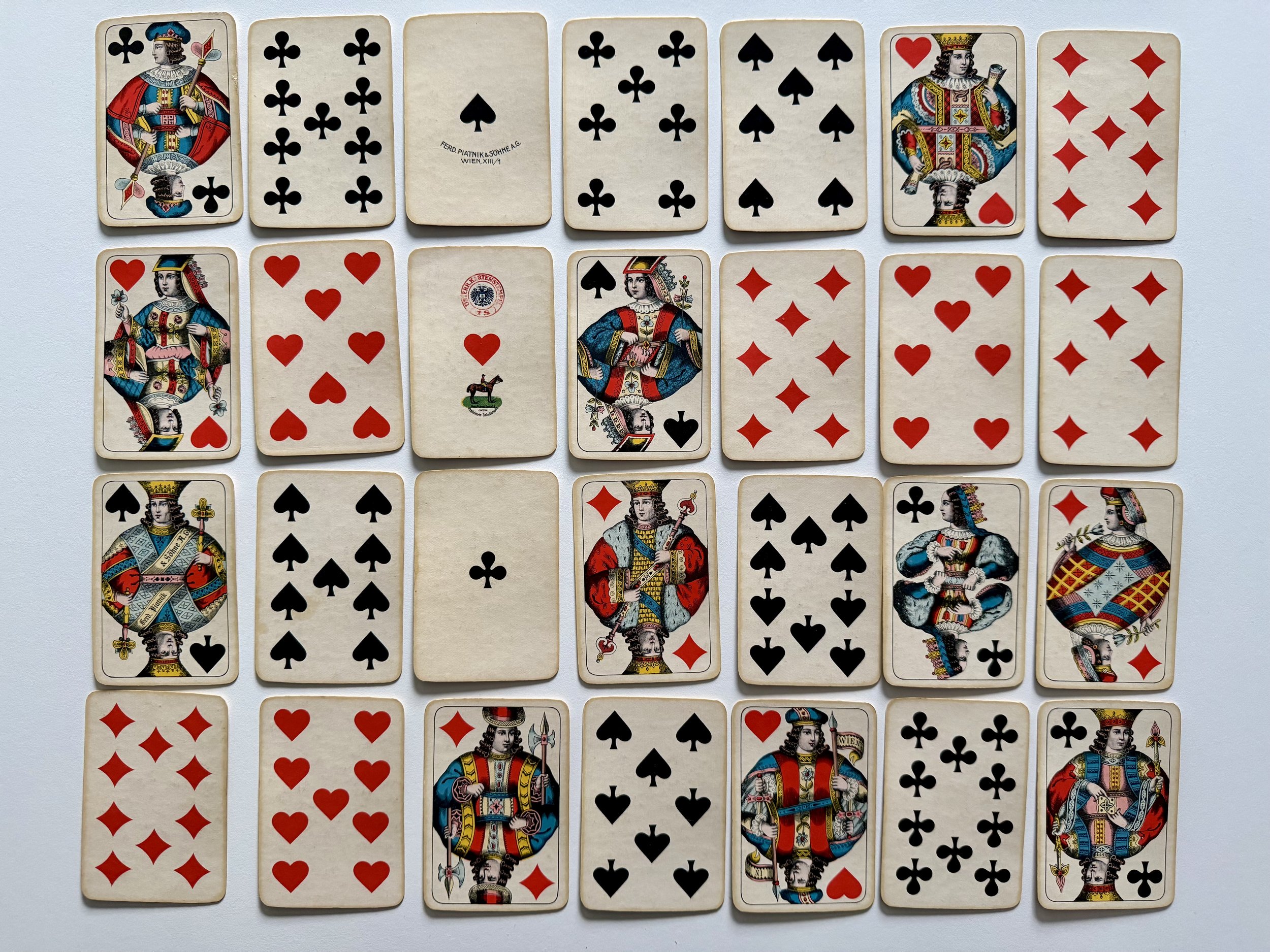
Now that the tableau is out, we do a quick scan and locate the significators. They sit at a middling distance from each other, mirroring how the situation currently feels for the client. On closer inspection, there is one card that connects them diagonally, and that is, again, where money and material assets come into play. They are both looking in different directions, preoccupied by their own separate concerns. The client carries less burden here, sitting in the top row with nothing above his head. He is, however, going to focus more on his financial stability and the underlying issues that need to be resolved (9♦, 7♦). He will successfully master his "heartache" related to this man (7♥), now that he has also left a dark period behind him (7♠). That, paired with the mirroring card (10♣), tells us that his focus does indeed turn away from this situation, as he tries to solve other burdens. The lover is also turning towards more pressing issues. We see that he is currently preoccupied with an elderly family member and the burdens associated with this situation, asking for an immediate resolution (Q♠ and 7♣ above, A♥ and A♠ flanking). He is also turning towards the development of his own business idea (A♣, J♦), as he works through serious obstacles (9♠, K♠). He is also trying to process quite a lot of grief at the moment, as he passes through a rather troublesome period, and the situation does not seem to get much better (10♠). The relationship with his partner, even in this situation, is rather a practical one (Q♣, Q♦), and takes a back seat in the context of the dramatic developments. To sum up, in order for this relationship to get a chance of development, they both need to work through some other pressing issues in other areas of life, and the client needs to understand that the situation of his lover is currently not an easy one. For now, we do not see this relationship deepening further.
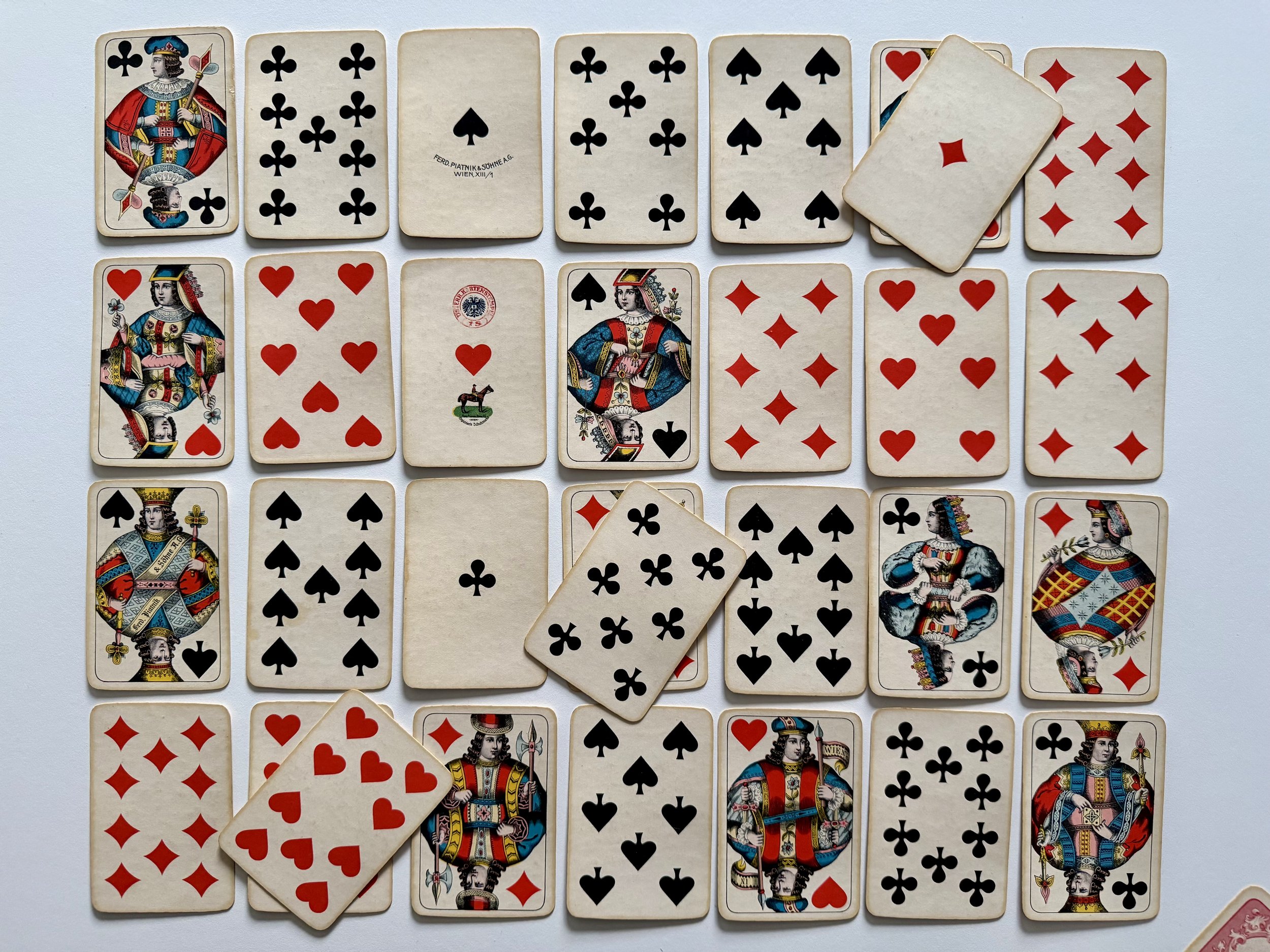
With four cards remaining after the laying of the Tableau, we can now proceed with covering the cards of interest. The client decided to cover three. First of all, the 9♥ appeared in the tableau, and as I like to honor traditions, I invited the client to make a wish and cover it with one card to see if it would come to pass. The other two cards the client decided to cover are the two significators. The card covering the wish card is 10♥: a sure fulfillment, on several levels. It is the card of emotional excess, and the one following the 9♥, plus we always want to see this card in matters of love and relationships, so if the wish was connected to this, all the better. The client might even receive some news regarding this very quickly, considering that the card covering him is A♦. The card covering the lover is 8♣, further cementing our previous interpretations: he is simply burdened at the moment, too burdened to do anything about the relationship beyond the obligations of work and dependence. This concludes the reading.
As we can see, reading a tableau for a precise question is possible, and as far as I am concerned, it is the preferable way of using this method. Once we can anchor our focus into a question, it is easier to know what to look for, and even more importantly, what not to look for. Clearly, I have not paid attention to the entire tableau, and that is exactly the point. The focus was on the two significators and where they find themselves within the tableau, and most importantly, whether they find each other in the tableau. Finally, it is all about the bird's-eye perspective: scope out the entire picture at first, and then zoom in to what looks significant and what relates to the question.
Reading The 32 Playing Cards
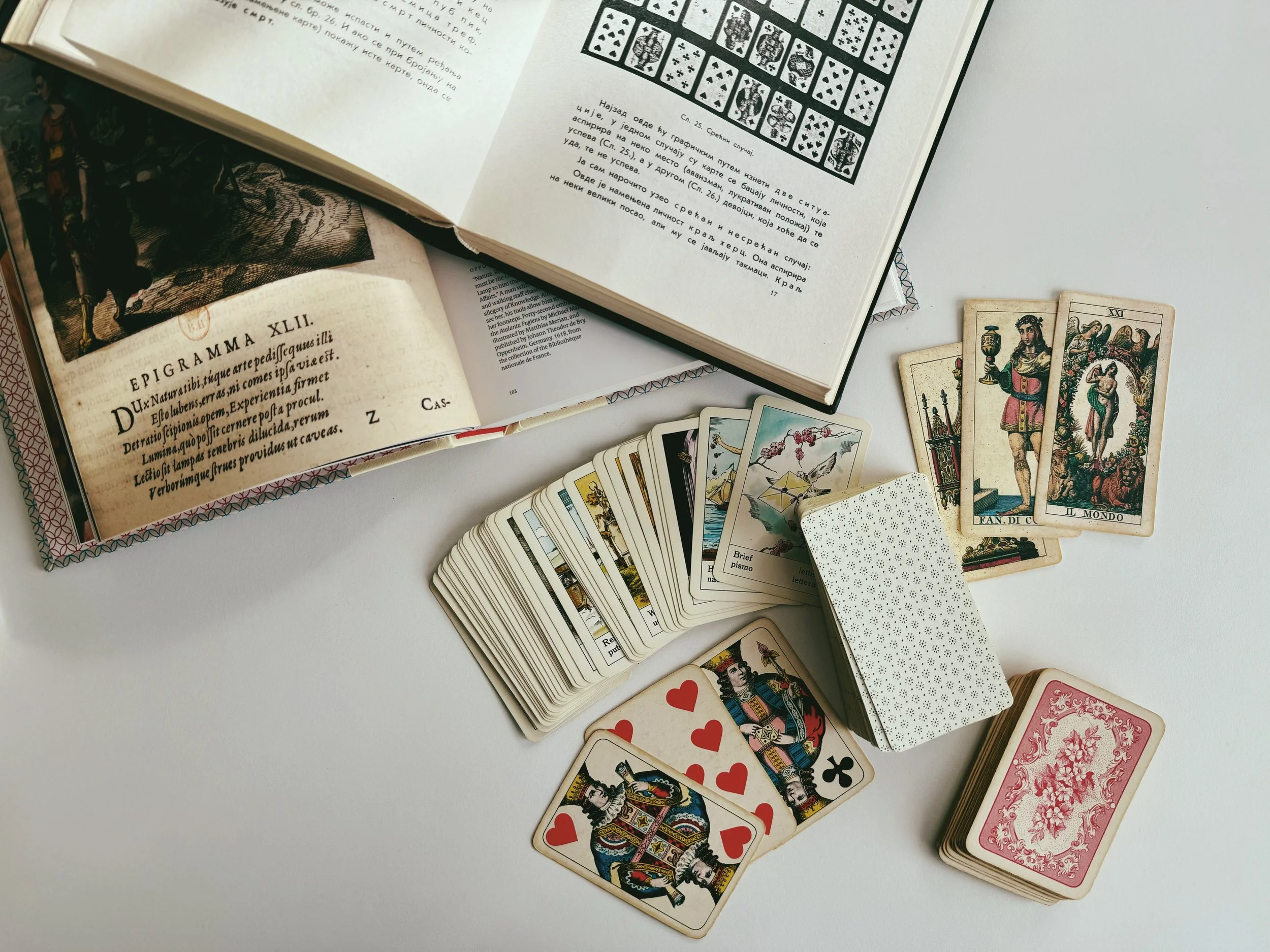
If the mechanics behind this reading, the tableau's structure, the placement logic, the role of significators, and the covering of cards are unfamiliar, that is precisely what Reading The 32 Playing Cards is built to teach. Nine lectures, from the logic of suits and numbers through to full tableau readings like this one, reconstructing the tradition card by card, layout by layout, so that you can read a tableau like this yourself, for your own questions or someone else's.
Support the Free Blog
This blog will always remain free. If you find value in the writing and want to help me sustain the time and research that go into each article, you can make a contribution of your choice. It keeps the work independent, ad-free, and focused on substance rather than volume.